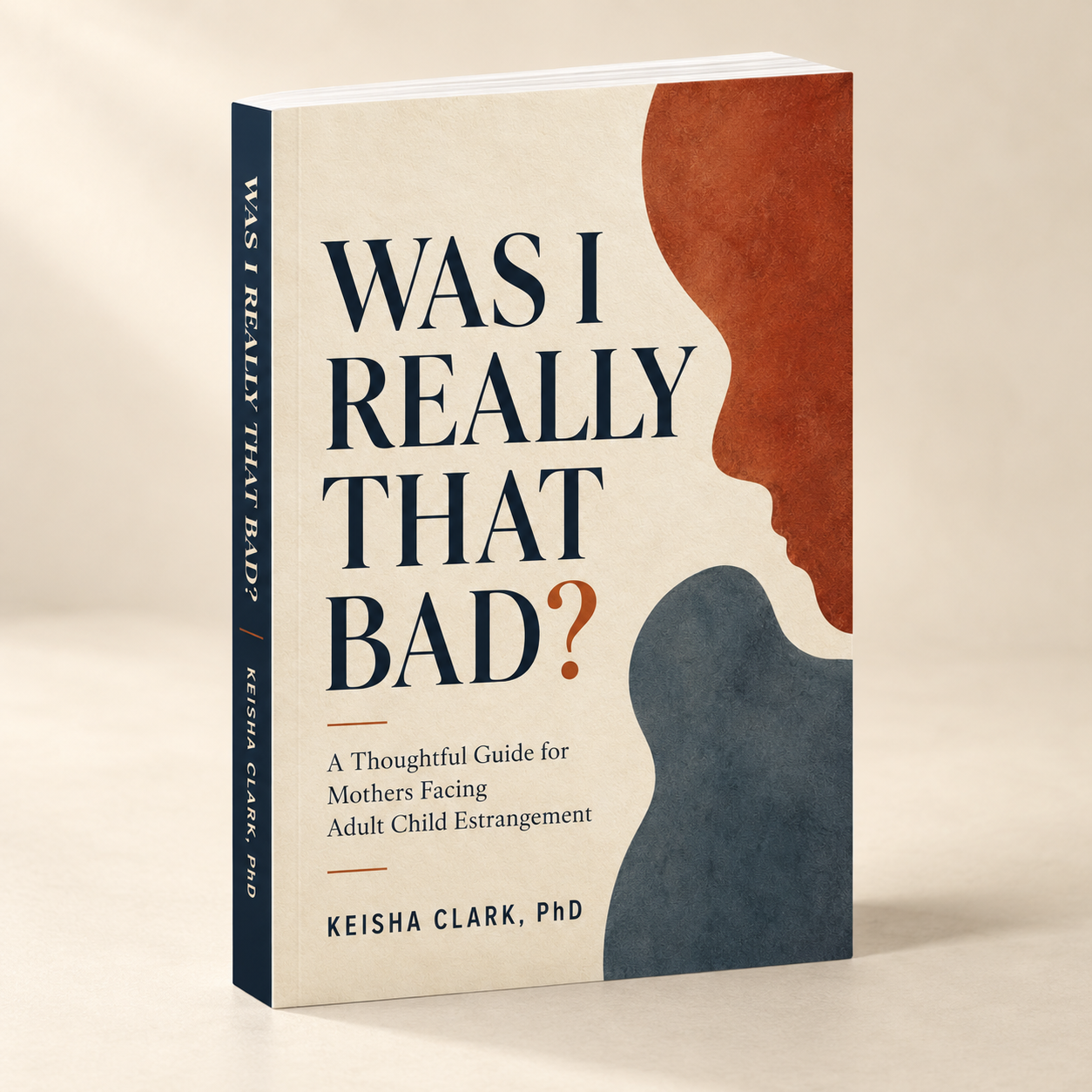
Was I Really That Bad?
A Thoughtful Guide for Mothers Facing Adult Child Estrangement
The mothers who go looking for a book like this one are rarely the ones who did the most damage. They're the ones awake at two in the morning, going back through 20 years of ordinary afternoons for the one moment big enough to explain why the calls stopped, and finding nothing that size. There isn't a moment that size. Your child isn't pointing at one either. What your child describes ran for years, and they left when they decided it wasn't going to change.
I interviewed adult daughters who had ended contact with their mothers, every one of them at least 25 and at least a year gone. Nearly all of them said the same thing, which is that they wanted their mothers. What they weren't willing to return to was the relationship as it had been running, and what they were asking for was different behavior instead of another explanation. This book tells you what they said, including the parts that are hard to read, and it's written for mothers of estranged sons and daughters alike. It gets into why you've been looking for the wrong moment, how two people can live in the same house for 20 years and come away with honest accounts that don't match, what a spouse or a therapist or a diagnosis did and didn't do to your child, what you answer for and what you don't, and how to grieve a child who is still alive.
It won't promise you your child comes back. What it gives you is a straight account of what happened, which part of it was yours, and what changed behavior would have to look like before it would be worth anything to either of you.
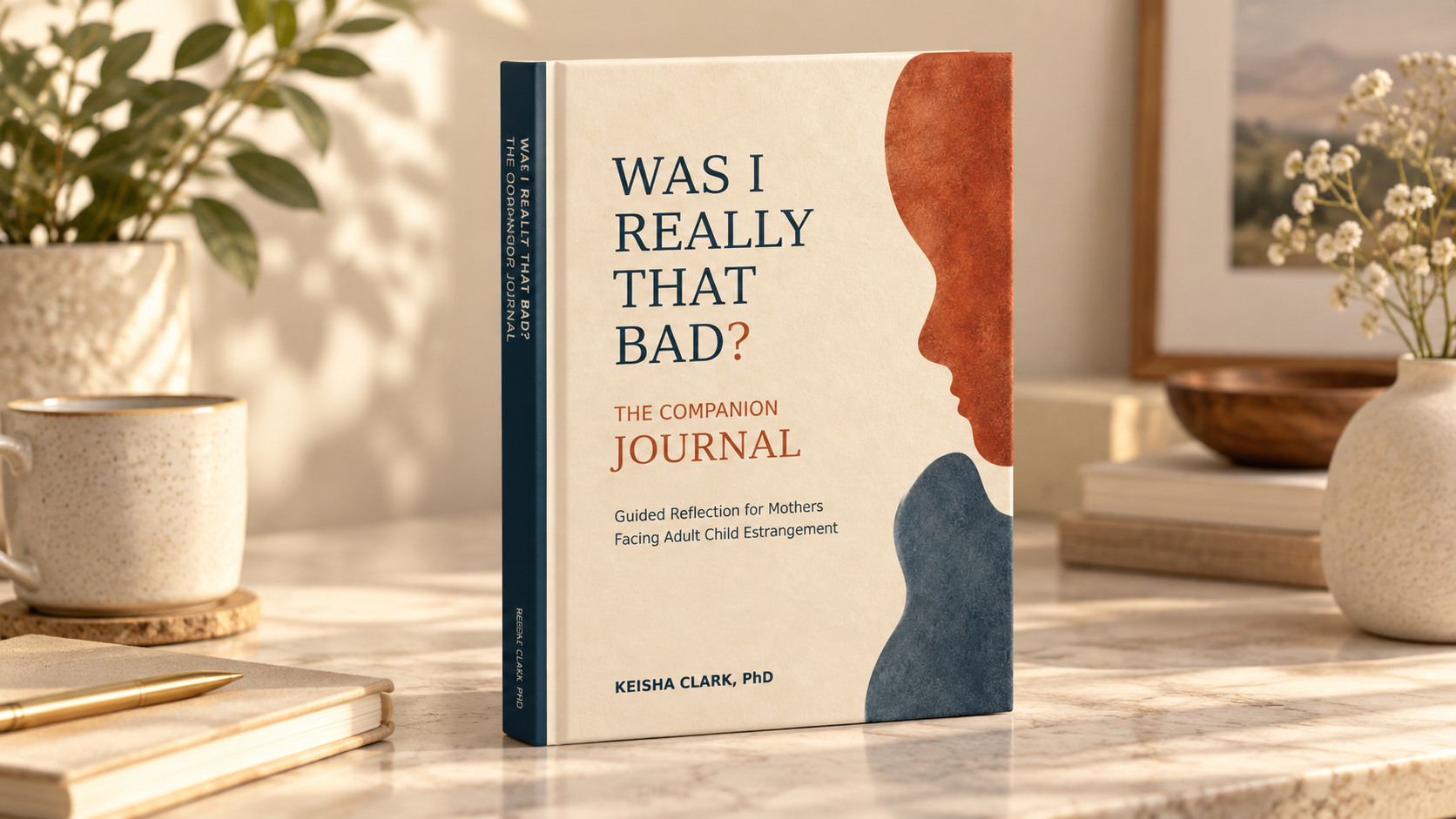
Was I Really That Bad? The Companion Journal
Guided Reflection for Mothers Facing Adult Child Estrangement
This journal goes with Was I Really That Bad?, and its thirteen sections follow the book chapter by chapter, so you can read a section and write about your own family while it's still fresh, or write first and go back to the chapter afterward. The exercises ask about particular conversations and particular years, the complaint you heard more than once, the year before the last message, what you meant by something and what your child took from it, because the general account you give people when they ask what happened doesn't have enough in it to work with.
You choose one child when you start an exercise, and if more than one has pulled back, each gets separate entries so one child's history doesn't turn into the explanation for another's. Every exercise has an opening prompt, a further question, and a full lined page to keep going on, and the prompts keep asking you to separate what your child actually told you from what you've assumed, which takes longer than you'd expect. There are opening reflections before the first chapter, unsent letters near the end, and pages for coming back to earlier entries once some time has passed.
Nothing in it asks you to contact your estranged child, and the letters stay in the journal, though a few exercises ask you to try something different with the people still in your life and come back to write down how it went. It isn't therapy, and it can't tell you what happened in your family. What you'll have at the end is a record in your own handwriting of what your child actually said, kept apart from what you've been guessing at, and you can bring that back to the book or to the next conversation, if there is one.
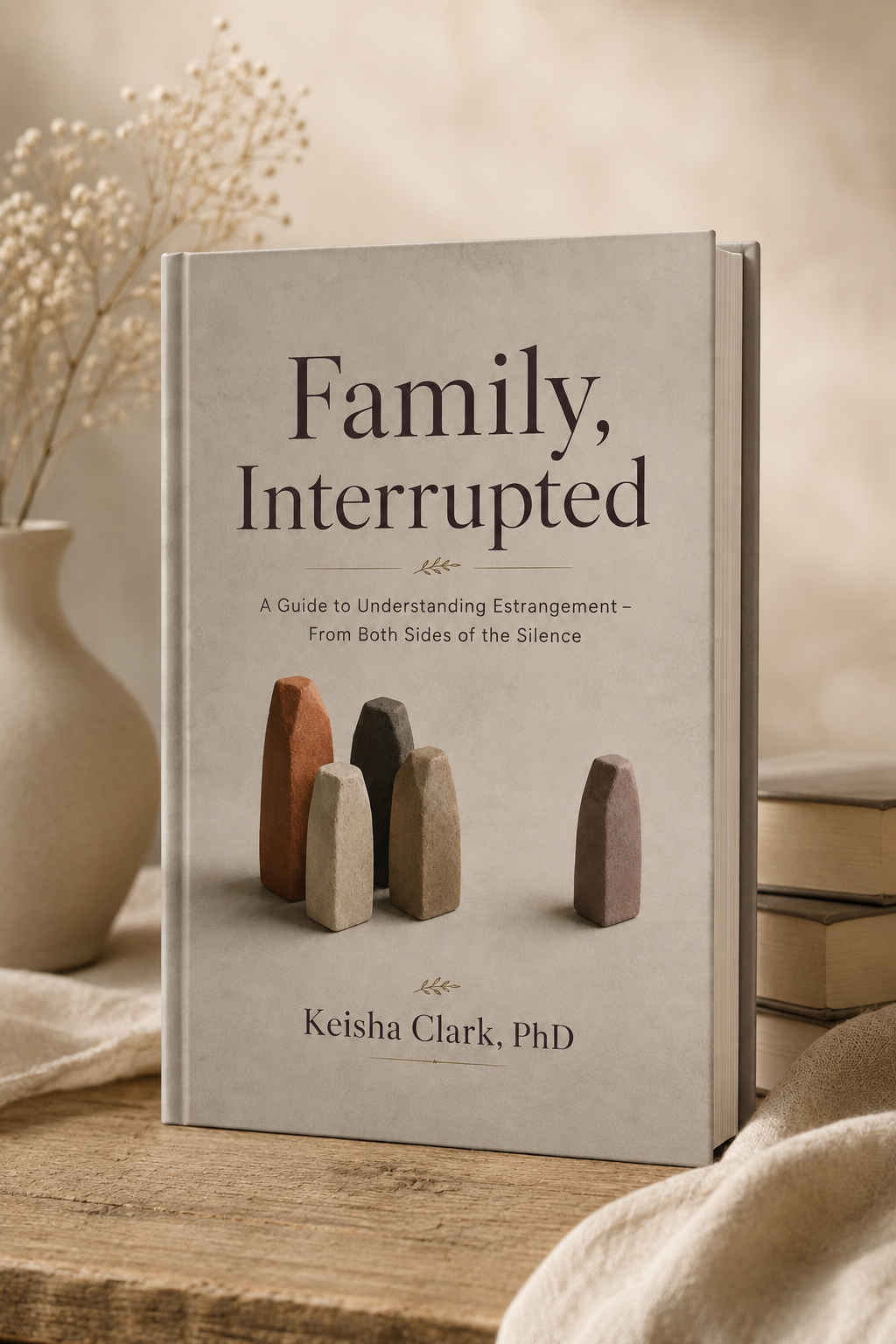
Family, Interrupted
A Guide to Understanding Estrangement, From Both Sides of the Silence
One in four adults is estranged from someone in their family, and almost none of them say so out loud, which leaves everyone inside it working from guesses. A parent goes back through ordinary afternoons looking for the one big enough to explain why the calls stopped, and finds nothing. An adult child steps away after more attempts than anyone watching will ever credit, and can't get a single person to understand that the decision took years. One of them is assumed to have done harm, the other is assumed to be overreacting to it, and both of them are mostly working it out alone.
Most books on estrangement pick a side in the first few pages. This one doesn't, because I've stood on both. It gets into why the final argument is almost never the cause, how two people can live in the same house for twenty years and come out with honest accounts that don't match, why grieving someone who is still alive follows none of the usual rules, and what the language of boundaries and narcissists has cleared up along with what it's hidden. Then there's the practical half, which is close to impossible to find anywhere else: the holidays, what you tell a coworker who asks, the message that shows up after two years of nothing, whether to send one yourself, and the hardest ones, the bedsides and the funerals and the wills and the care of a parent who caused harm.
It won't promise you reconciliation and it won't promise you peace through distance. It gives you a straight account of something common, painful, and badly understood, so that whatever you decide, you decide it with clarity instead of alone and in the dark.
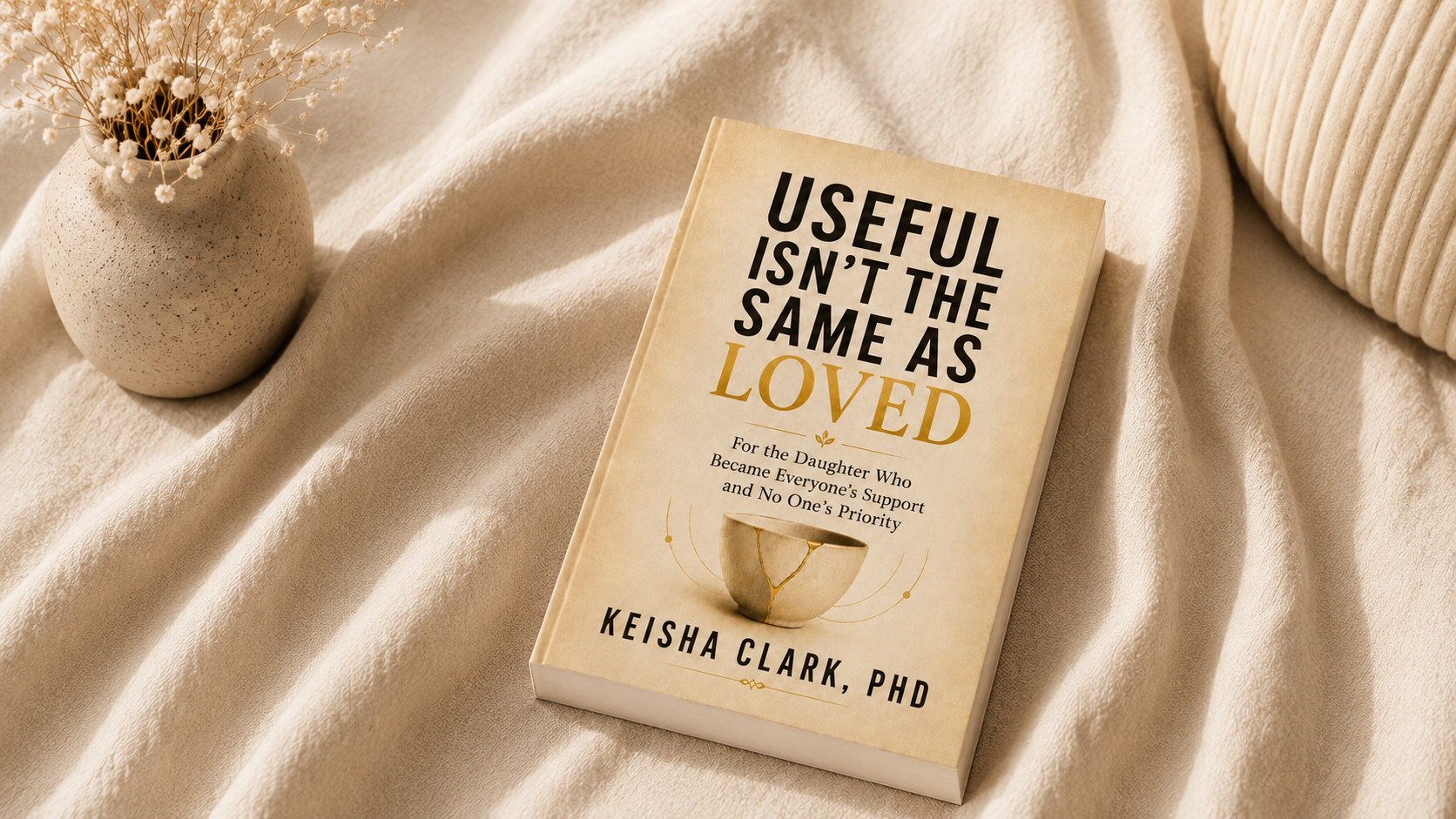
Useful Isn't the Same as Loved
For the daughter who became everyone's support and no one's priority
You got distance from her, or you got out entirely, and some part of you expected that to settle things. It settled some of it. What it didn't touch is the part that isn't about her at all anymore, the way you carry more than you're given, the way asking for help feels like running up a debt, the way you can read a room's mood in about four seconds and start fixing it before anyone's said a word.
Those aren't personality. They're training, and training doesn't stay in the house where you learned it. It comes with you into friendships, into work, into whoever you love now, and it keeps doing the job it was built to do long after the job stopped being necessary.
Estrangement changes the relationship. It doesn't erase what formed inside it.
This book is about what happens afterward. Most writing on estrangement stops at the decision, whether to go, whether to stay gone, whether you're allowed to. That decision gets treated as the whole story, and then you make it and find out it was the first page.
Useful Isn't the Same as Loved picks up where that leaves off. It comes out of years of research into family estrangement and out of the conversations that followed, with women who couldn't work out why the effects hadn't ended when the relationship did. The patterns get named one at a time, through research, through psychology, and through vignettes close enough to your own life that you'll probably recognize the kitchen.
If you've spent years being the reliable one, the capable one, the one who handles it, and you've started to notice that being needed and being loved are not the same arrangement, this book was written for you. It won't tell you what to do about your mother. It's about what she taught you, and what you do with that now.
Why I wrote this book
I founded The Estrangement Project because estrangement deserves better conversations than the ones it usually gets, the ones that rush to a verdict about who was right. This book is the first step in that mission.
Keisha Clark, PhD
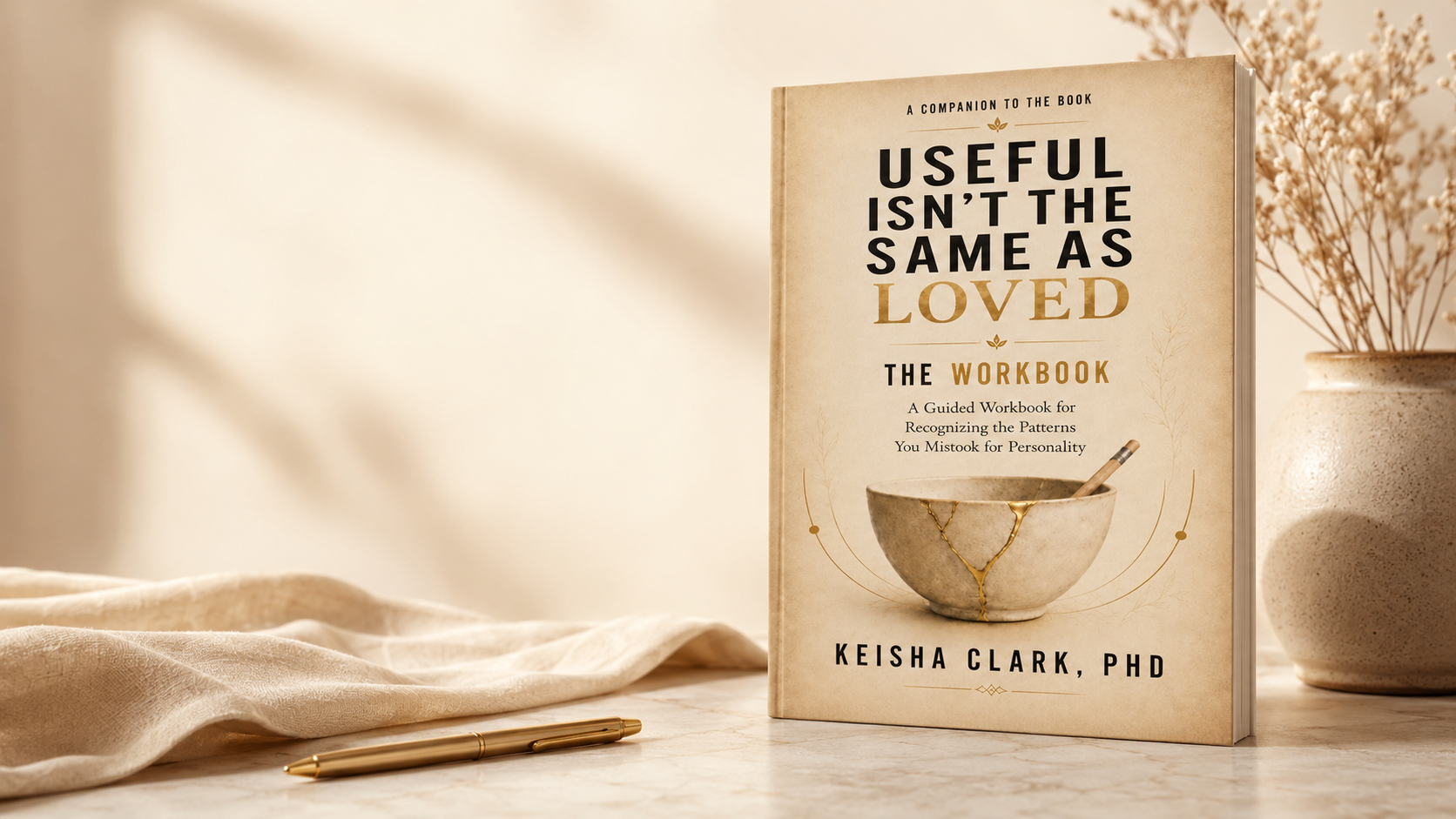
A companion to the book
Useful Isn't the Same as Loved
The Workbook
For the reader who's done recognizing the pattern and wants to do something with it. A guided companion for naming the patterns you mistook for personality.