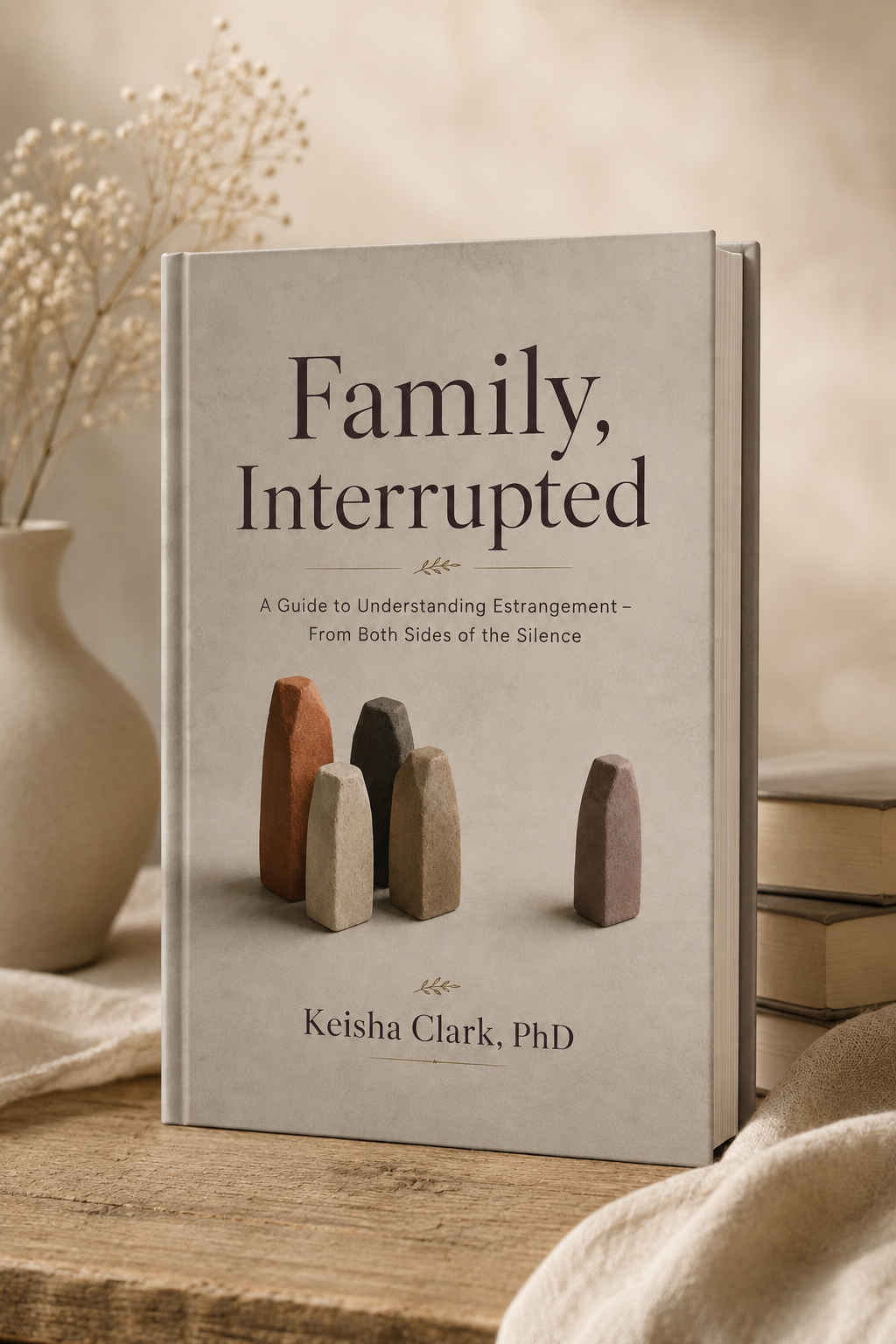
Family, Interrupted
A Guide to Understanding Estrangement, From Both Sides of the Silence
One in four adults is estranged from someone in their family, and almost none of them tell anyone, which leaves everyone inside it working from guesses. A parent goes back through ordinary afternoons looking for the one big enough to explain why the calls stopped, and finds nothing. An adult child steps away after more attempts than anyone watching will ever credit, and can't get a single person to understand that the decision took years. One of them is assumed to have done harm, the other is assumed to be overreacting to it, and both of them are mostly working it out alone.
What the book gets into
Why the final argument is almost never the cause
How two people can live in the same house for twenty years and come out with honest accounts that don't match
Why grieving someone who is still alive follows none of the usual rules
What the language of boundaries and narcissists has cleared up, along with what it's hidden
The practical half
- The holidays
- What you tell a coworker who asks
- The message that shows up after two years of nothing
- Whether to send one yourself
- The bedsides, the funerals, the wills, and the care of a parent who caused harm
About the book
Most books on estrangement pick a side in the first few pages. This one doesn't, because I've stood on both. It gives you a straight account of something common, painful, and badly understood, so that whatever you decide, you decide it knowing what you're deciding instead of alone and guessing.
It won't promise you reconciliation and it won't promise you peace through distance.
Dr. Keisha Clark, PhD, for The Estrangement Project