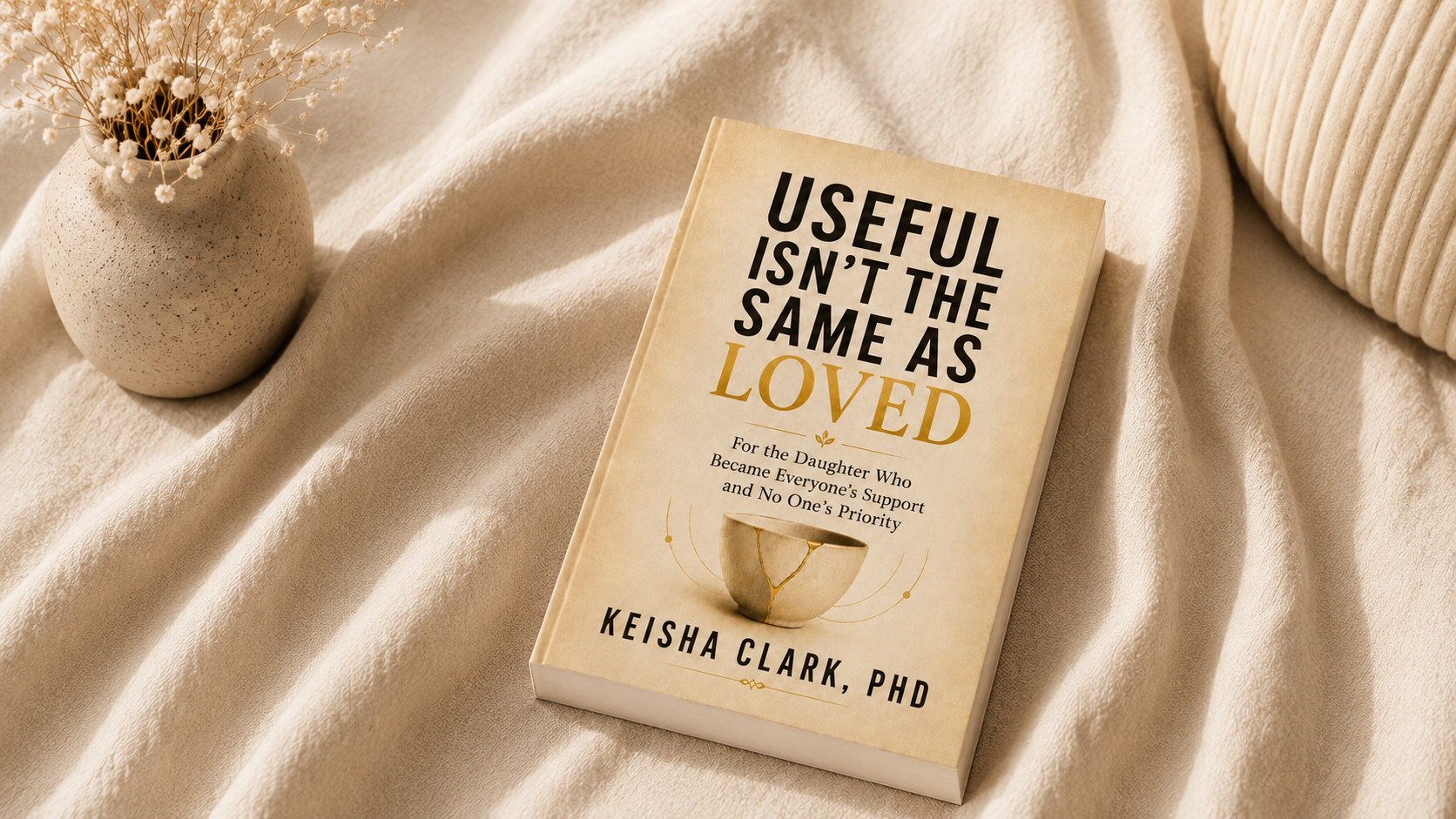
Useful Isn't the Same as Loved
For the Daughter Who Became Everyone's Support and No One's Priority
You got distance from her, or you got out entirely, and some part of you expected that to settle things. It settled some of it. What it didn't touch is the part that isn't about her at all anymore: the way you do more than you're given, the way asking for help feels like asking too much, the way you can read a room's mood in about four seconds and start fixing it before anyone's said a word.
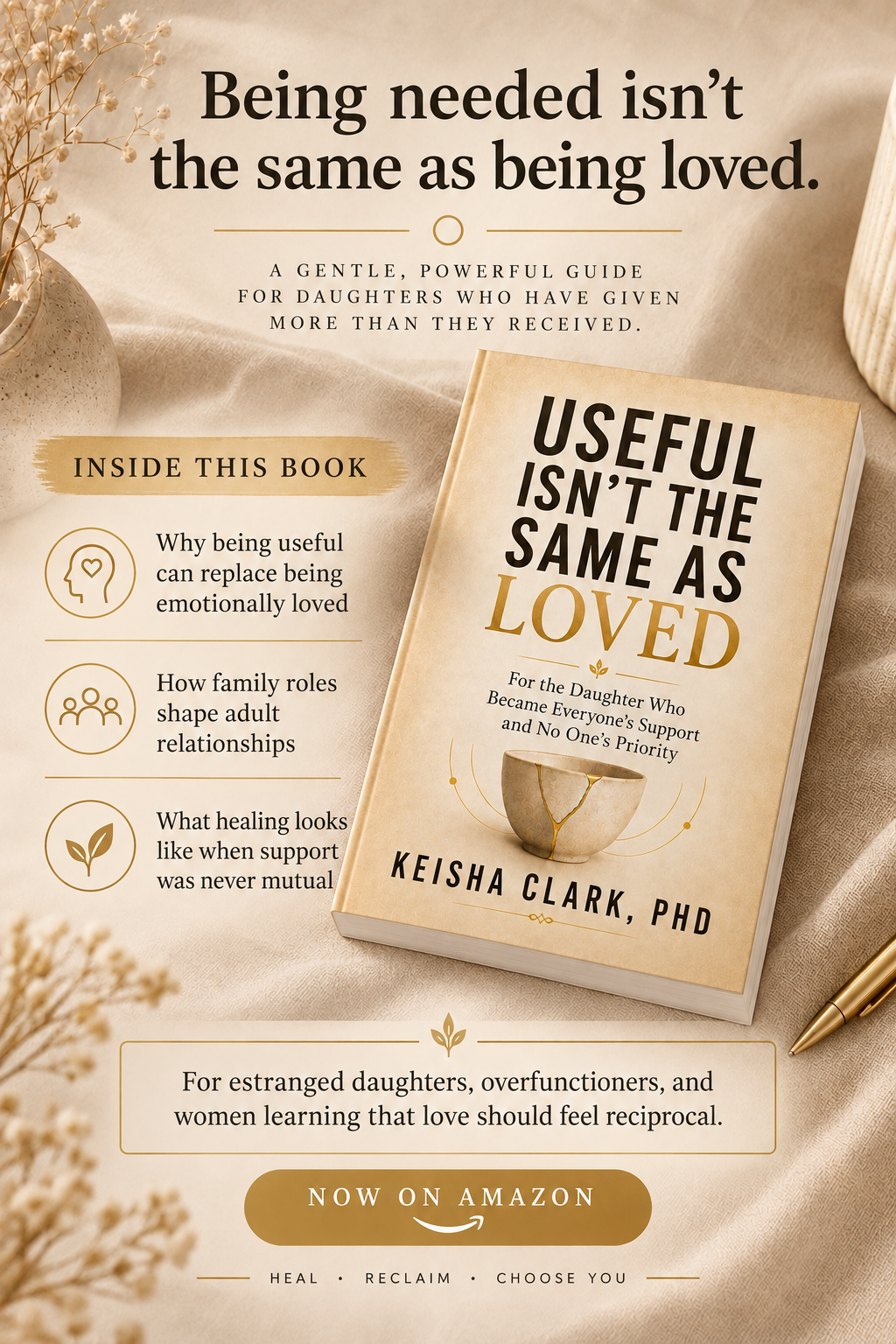
What the book gets into
Why getting distance settled some of it and left the rest where it was
Why asking for help feels like asking too much, even from people who offered
How you learned to read a mood in four seconds and start fixing it before anyone speaks
What that training keeps doing at work, with friends, and with whoever you love now
About the book
Those aren't personality. They're training, and training doesn't stay in the house where you learned it. It comes with you into friendships, into work, into whoever you love now, and it keeps doing the job it was built to do long after the job stopped being necessary.
This book is about what happens afterward. Most writing on estrangement stops at the decision, whether to go, whether to stay gone, whether you're allowed to. That decision gets treated as the whole story, and then you make it and find out it was the first page.
Useful Isn't the Same as Loved picks up where that leaves off. It comes out of years of research into family estrangement and out of the conversations that followed, with women who couldn't work out why the effects hadn't ended when the relationship did. The patterns get named one at a time, through research, through psychology, and through vignettes close enough to your own life that you'll probably recognize the kitchen.
If you've spent years being the reliable one, the capable one, the one who handles it, and you're starting to notice that being needed and being loved are not the same arrangement, this book was written for you. It won't tell you what to do about your mother. It's about what she taught you, and what you do with that now.
Why I wrote this book
I founded The Estrangement Project because estrangement deserves better conversations than the ones it usually gets, the ones that rush to a verdict about who was right. This book is the first step in that mission.
Keisha Clark, PhD
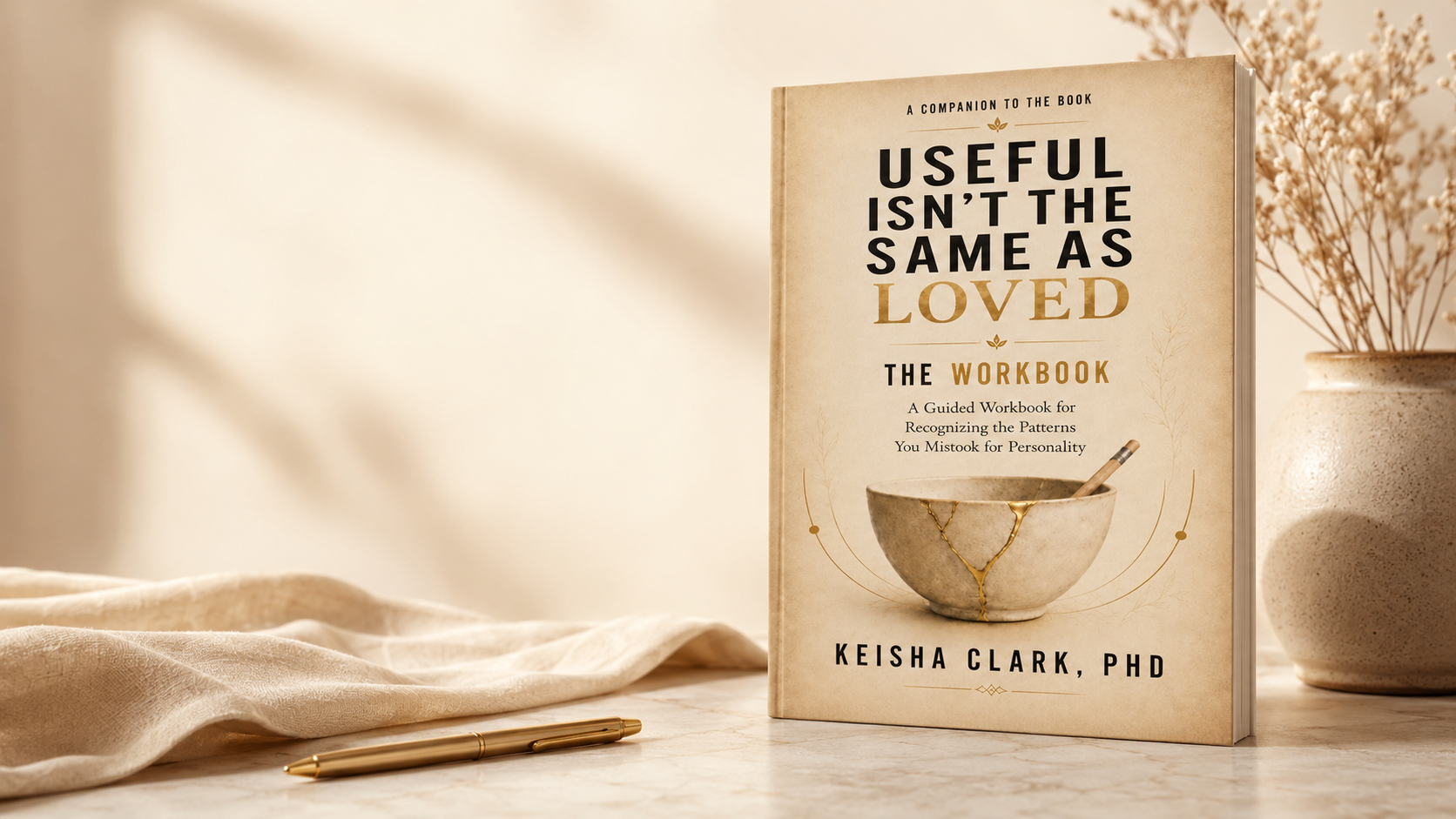
Useful Isn't the Same as Loved: The Companion Workbook
For the reader who's done recognizing the pattern and wants to do something with it
The book names the patterns, and the workbook is where you find out which ones are yours. It follows the book's nine chapters, and each one has an assessment you score yourself, 24 statements in three sections of eight, so you're working from what you actually do instead of what you'd guess about yourself on a good day.
Each section of your score comes with its own interpretation, 27 in all, and the Pattern Profile pages have lines for writing down where each pattern shows up now, with friends, at work, with whoever you love. It won't tell you what to do about your mother any more than the book does.
Estrangement changes the relationship. It doesn't erase what formed inside it.
Dr. Keisha Clark, PhD, for The Estrangement Project