How settling a parent's estate uncovers decades of unspoken family roles, and why inheritance disputes between sisters are rarely just about the money.
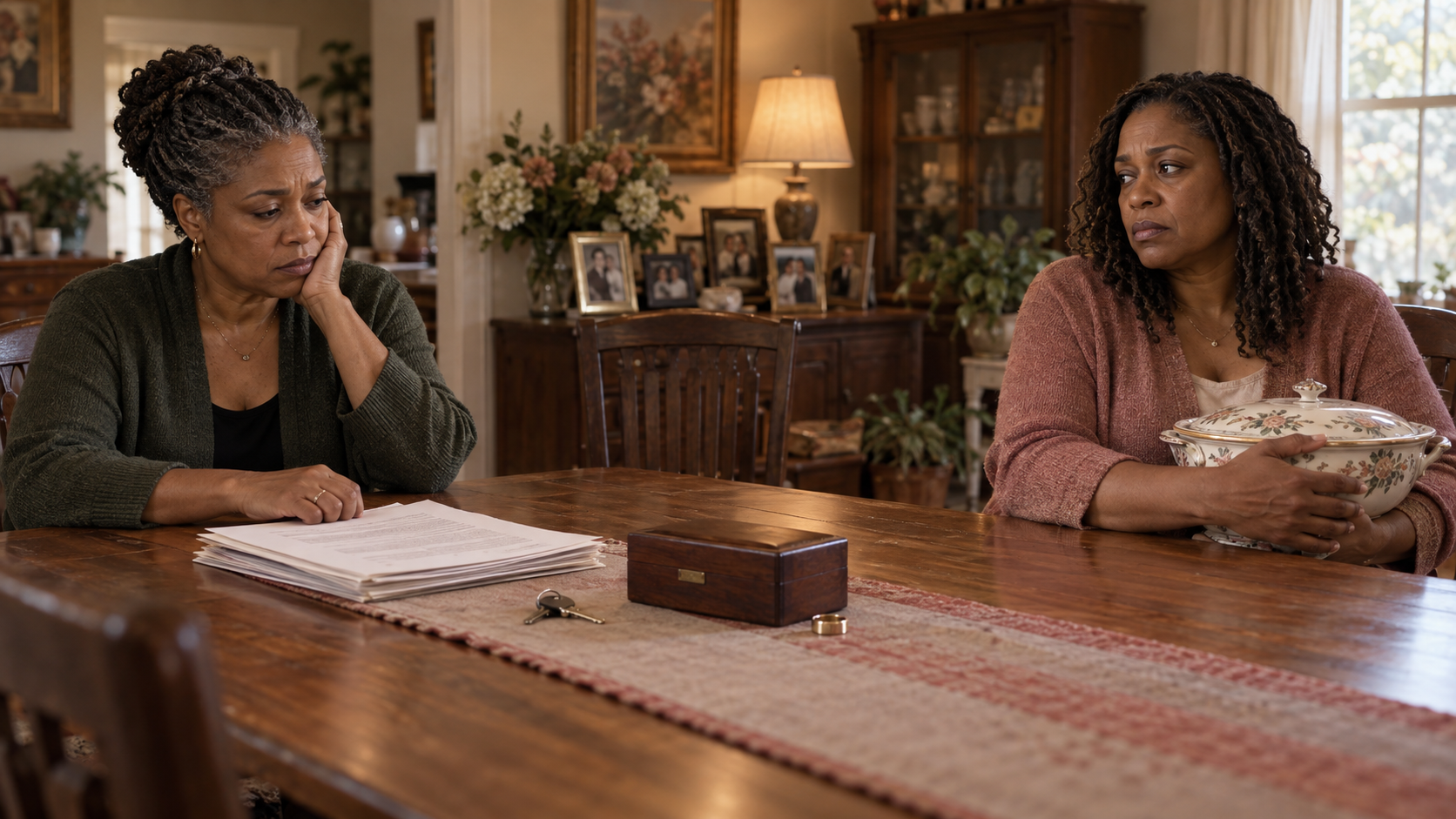
You can know your sister for fifty years and still learn something new about the relationship when money is involved. A parent's estate puts grief, old family roles, and decisions about property into the same few months, at a point when both of you are already dealing with the death itself.
It starts with something that looks manageable. One of you thinks the house should be listed now, the other wants a few months before deciding anything. A ring becomes the problem because you both remember being promised it, and neither of you has anything in writing.
The amount is rarely the whole argument. If your sister got more, you read the difference through everything that came before it, and she reads it as a decision your mother made in her last year. What you see is your mother favoring her the way she did when the two of you were children.
Your sister might have an explanation you hadn't considered. She drove your mother to appointments for three years, cut her hours at work to do it, and she believes the larger share makes up for the income she gave up. You think she chose to do that, and that choosing it shouldn't change what your mother meant to leave all of you. Both of you can hold your position for years.
When Equal Shares Aren't Equal
Equal shares cause fights too. One of you wants to keep the house and can't come up with the eighty thousand dollars it would take to buy the other out. The other wants her share now and doesn't see why her money should stay in a house she'll never live in. Both positions are reasonable and they can't both be satisfied.
Your mother's furniture might be worth six hundred dollars at an estate sale and still be the hardest part of the process. You want the dishes because of Sunday dinners, your sister wants them because your mother told her years ago she could have them, and nobody wrote any of it down. The argument turns into which of you knew your mother better, and each of you starts using your own relationship with her as proof that your memory should count.
Relatives dismiss all of it because they think you're fighting over dishes. What you're arguing about is who was promised what, and whether your place in the family was ever as secure as your sister's.
Old Assumptions and Fast Decisions
Old assumptions about money come out too. The sister who earns more gets told she doesn't need as much, and the one who earns less gets told she was never careful with it. Need and entitlement are different questions, and your family won't agree on which one should decide an inheritance.
Your sister might also make decisions before you've had a chance to respond. She takes things out of the house, closes an account, or talks to the attorney on her own. The decision might have been practical, and being left out of it still damages trust when the two of you are supposed to have an equal say.
Once attorneys are involved the relationship changes again. Conversations move into email, and both of you write every message knowing somebody else might read it later. Legal help can be necessary, and it makes the distance between the two of you obvious to everyone in the family.
Grieving Two Relationships at Once
You might be grieving two relationships at the same time. Your mother is gone, and the person who remembers the same childhood is now on the other side of a dispute, and there's no room to deal with one loss before the second one starts.
Some sisters repair this after the estate closes. Time passes, the money questions are settled, and both of you can eventually talk about what happened without treating every disagreement as proof of bad character. Other relationships don't recover. You decide your sister handled money in a way you can't trust, or she decides you made your mother's death harder by turning every decision into a dispute, and the inheritance becomes part of how each of you explains the other.
People say money should never come between family. What usually happens is that money brings out what everyone already believed about fairness, obligation, and who deserves what, and an estate is the first time anybody has to say so.
Further Reading
If you are navigating the breakdown of a sibling relationship and trying to understand how old family dynamics resurface during times of grief and transition, understanding these hidden fractures can help you find your footing.
Explore Family, Interrupted